
Donor Peer Network Visits Annenberg Wildlife Crossing
by Finley West
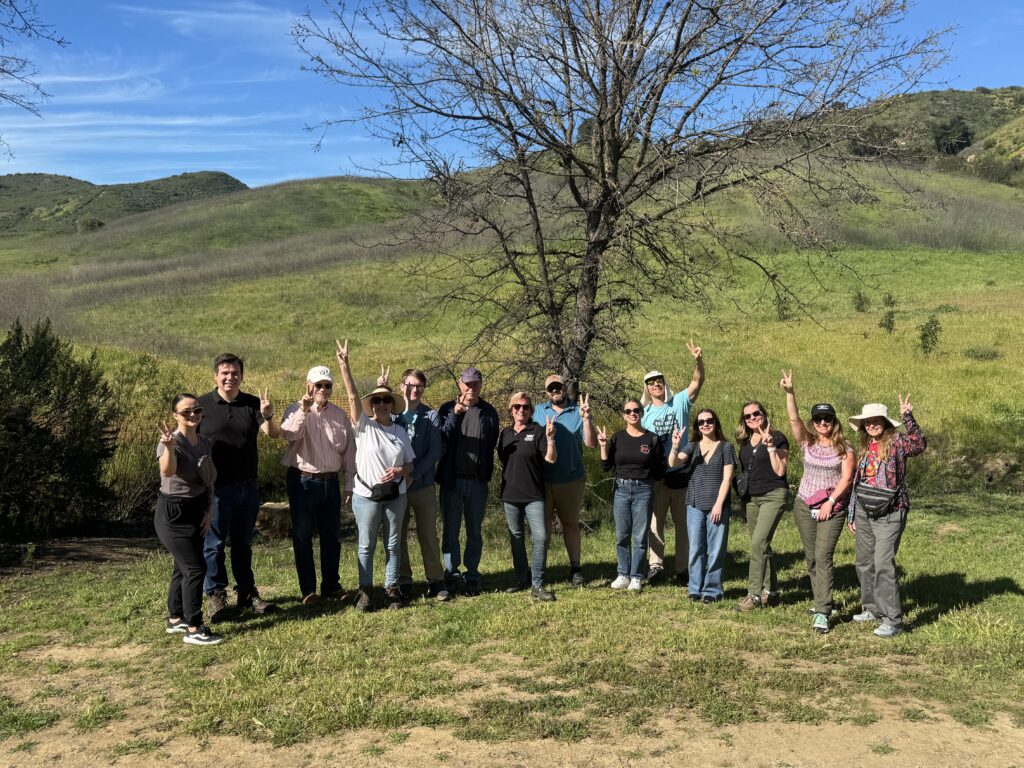
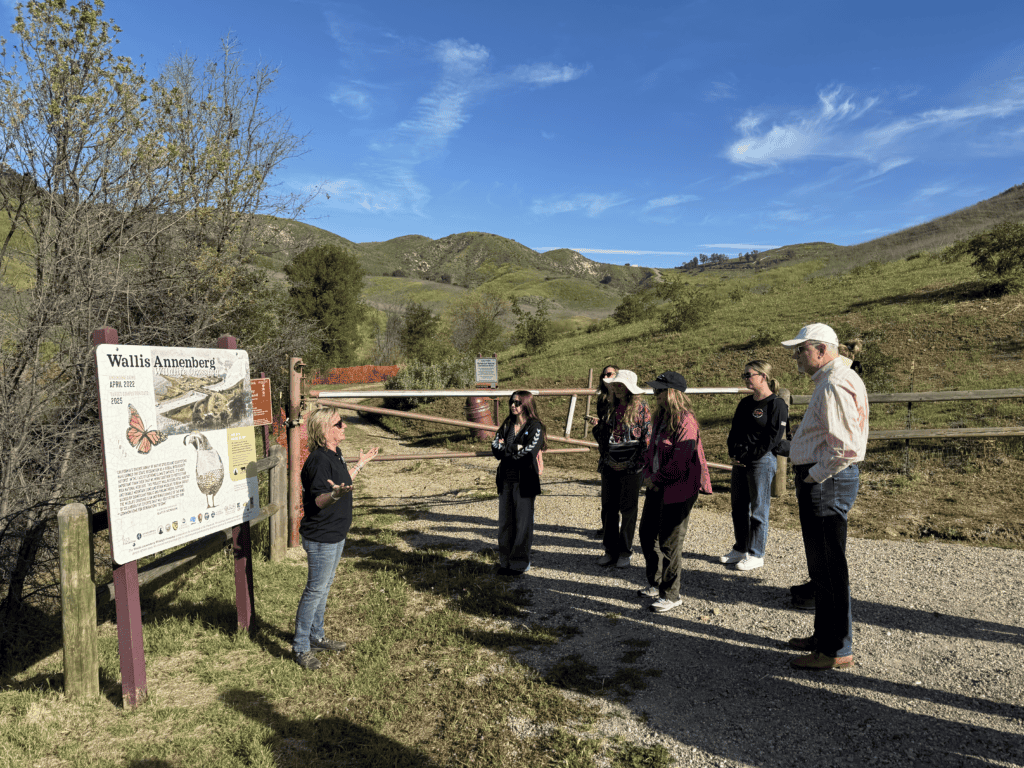
The Wallis Annenberg Wildlife Crossing outside Agoura Hills is more than just a bridge for wildlife to cross the busy 101 Freeway; it’s a lifeline for local wildlife and plant populations to prosper and grow.
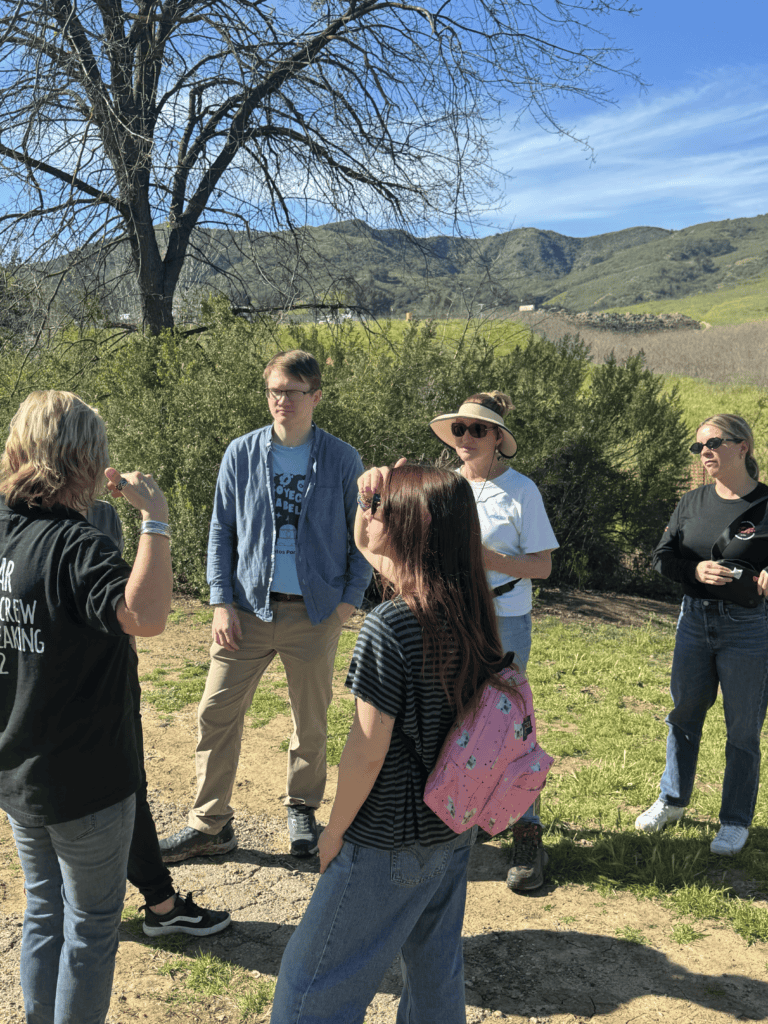
As this 12-acre natural overpass is reaching its completion later this year, some of our VCCF team and Donor Peer Network members had the opportunity to meet with Lauren Gill, Deputy Director of the National Wildlife Federation, to learn more about the project and the scope of its long-term impact. Standing on an adjacent trail with a breathtaking view of the crossing and Simi Hills, we were informed on the construction history and the goals of this ambitious, impactful project.
As Lauren shared with us during the visit, the separation of the hills caused by the freeway has isolated the population of cougars that make their homes in the Santa Monica Mountains. The crossing will allow for new cougars to travel and make homes in this area, broadening the genetic pool of the existing cougar population and helping mitigate detrimental health issues that can occur from having such limited genetic variation. It also creates a darkened area for other species, such as avians and creatures who travel at night or are frightened by lights and freeway movement, to have a safe and navigable way across the highway.
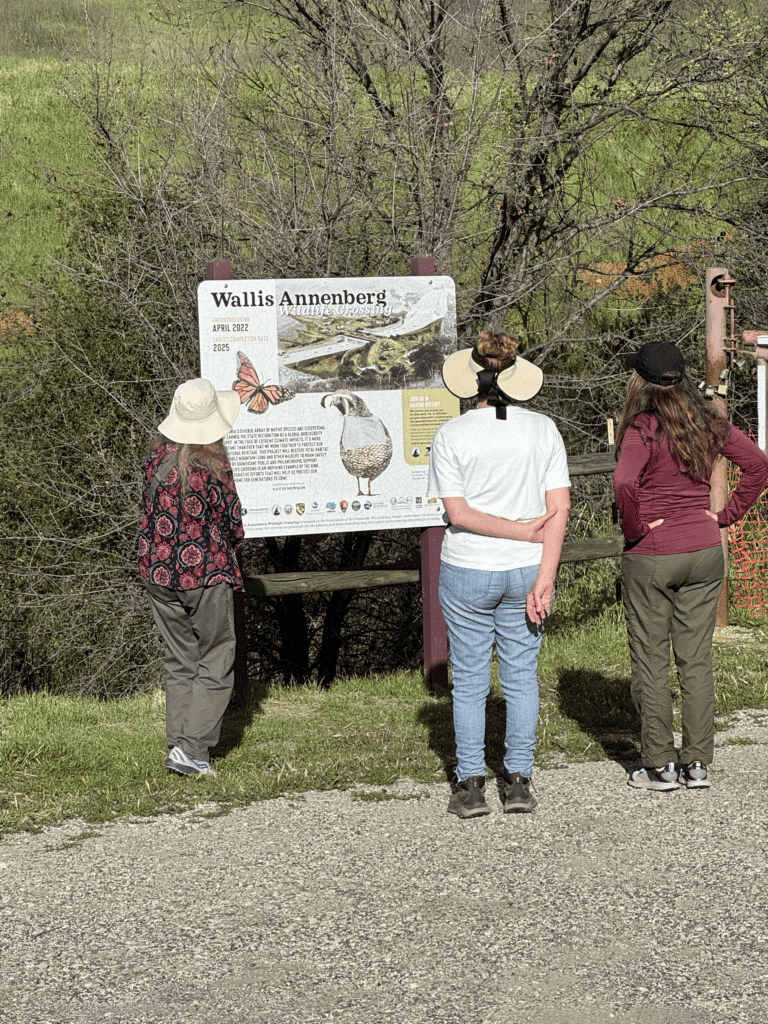
Aside from strengthening the area’s native cougar population, another significant piece of their work is planting oak trees and other native flora to help make the area more naturally lush, as well as fight back against the invasive black mustard that has overrun much of the region. This species of mustard is exceptionally dry and has overtaken the area where trees and other native greenery were once present. Black mustard not only makes it hard for other species to grow due to the speed at which it spreads, but also its dryness presents a dramatic fire risk. In response, the oaks planted in this area are more fire resistant as a result of their thick bark, slowing wildfires as they occur.
All this to say, the project seeks to repair the broken natural features by not only bringing wildlife mobility back into the area, but also allowing native flora to thrive once more, and to better prepare the land for any future cases of wildfires. The project’s completion is slated for later this year and will be the largest wildlife crossing of its kind in the world, and while some crossings have already occurred with avian species, we can all expect to see much more usage from cougars and other wildlife upon its completion.
If you’d like to see how the project is progressing and soon have a closer view of wildlife utilizing the crossing, you can visit the project’s website.